
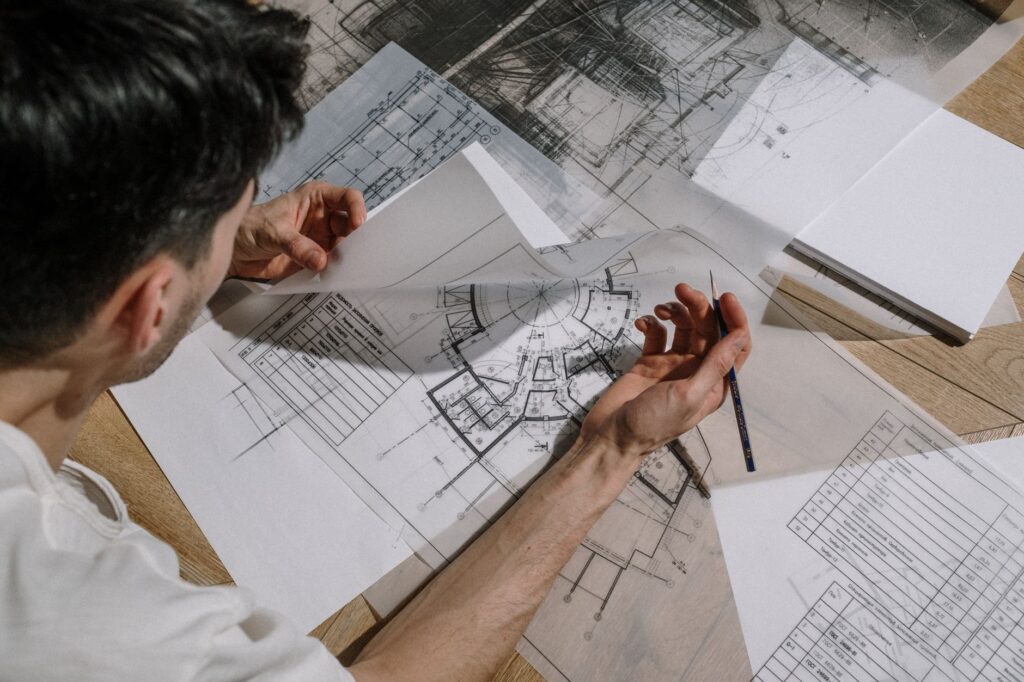
Before investing in a full home design, it helps to know whether the project you have in mind fits your property and budget. A feasibility study is an early, focused look at those questions. Fold Architecture begins each project with a paid two-hour study intended to give clients a grounded starting point.
Bring a clear picture of what you want
You don’t need a finished plan. A short list of priorities is more useful: how many people the home needs to serve, what spaces matter most, and what is prompting the project now. For a renovation, note what works in the existing house and what does not. For an ADU, consider its likely use and who may live there.
Bring the property address and any information you already have, such as a survey, existing plans, or a rough budget. These materials can help make the conversation more specific, but you can start without having every detail settled. Be candid about the budget range you are considering; the point is to test the project against real constraints, not to defend an early estimate.
Understand what the study examines
The study looks at what your lot and budget may be able to support. That includes zoning and setbacks, which help establish where and how a project might fit. It also includes a rough construction cost, so you can compare the scale of the idea with the resources available.
These early findings are useful for making decisions, but they are not a final design or a contractor’s bid. Construction costs can change as the scope, materials, site information, and market conditions become clearer. Likewise, confirming a project’s requirements may call for further research as design develops. Treat the study as an informed first assessment rather than a promise that a particular plan or price is settled.
Use the findings to choose a direction
A study can help you decide whether to proceed, rethink the scope, or pause. If the initial idea appears too large for the budget, you can ask which priorities might be protected in a smaller version. If a site constraint limits one location or layout, you can consider alternatives before spending time developing a detailed scheme.
It is also a chance to clarify what you still need to learn. You may need more information about the property or want to compare a renovation with a new home. Knowing those questions early makes the next step more deliberate.
Start with decisions, not assumptions
A feasibility study cannot remove every uncertainty from a building project. It can make key constraints visible early and give you a clearer basis for deciding what to explore next. That is especially valuable when zoning, setbacks, scope, and budget all shape one another.
If you’d like to test what your property and budget can support, get in touch about Fold Architecture’s paid two-hour feasibility study.